

Call or Text:
(920) 370-3430
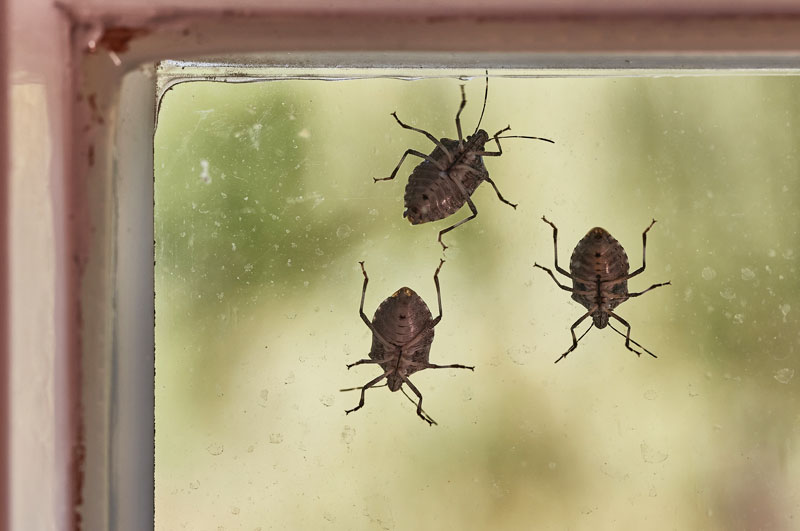
Every fall, as the nights get cold, stink bugs start lining up on the sunny side of homes across Menasha and the Fox Valley, looking for a way inside to spend the winter. Once they find a gap, they settle into wall voids and attics, then show up on windows, lamps, and ceilings all winter long. Crush one, and you’ll find out quickly how they got their name.
The invasive brown marmorated stink bug has spread to more than 50 Wisconsin counties since it first appeared here around 2010, and University of Wisconsin entomologists report its strongest presence in the south-central, southeastern, and east-central parts of the state. The Fox Valley sits right in that east-central zone. Professional stink bug control from Slayer Pest Control stops them at the exterior before they get in, which is far easier than trying to get them out once they’re inside your walls.
Our technicians identify which stink bugs you’re dealing with, find the gaps they’re using, and time an exterior treatment to the weeks they’re trying to move in. We’ll also show you the simple sealing fixes that keep them out for good.
We proudly provide residential stink bug removal throughout Menasha, Appleton, Neenah, Kimberly, Greenville, Fox Crossing, Harrison, Oshkosh, and the entire Fox Valley, plus Green Bay and De Pere.
"*" indicates required fields
Wisconsin has several kinds of stink bugs, and they all share the same flat, shield-shaped body. Only one causes most of the fall home invasions: the brown marmorated stink bug.
For that reason, we only get calls about the brown marmorated stink bug, as these gather in large numbers in the fall to invade and overwinter inside homes and buildings. Native brown or green stink bugs hang out in fields, gardens, or trees, and do not gather in large numbers.
Stink bug activity varies from property to property, but often we get the most calls in Hortonville, Greenville, and Neenah. These tend to be at homes surrounded by wooded areas, open fields, mature landscaping, and sunny exterior walls.
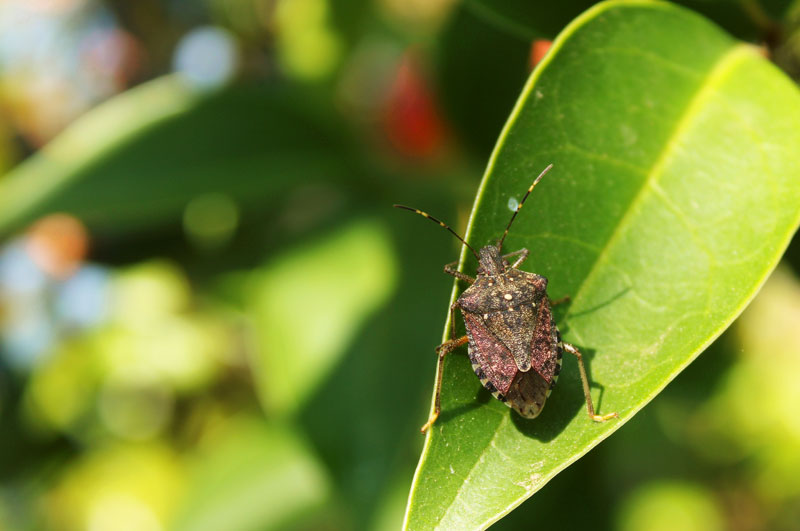
Knowing which stink bug species you have tells us how to treat it, and whether it needs treating at all.
| Species | How to Recognize It | Native or Invasive | Gets Into Homes? |
|---|---|---|---|
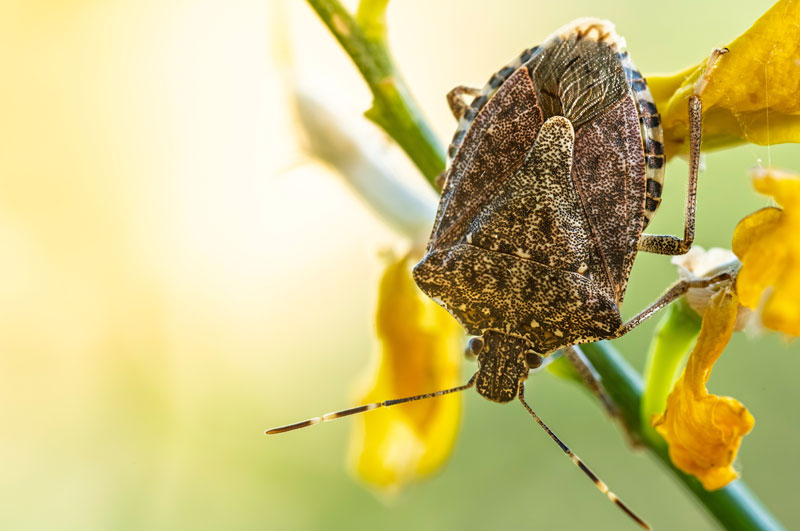
| Brown Marmorated Stink Bug | ½ to ⅝ inch; mottled brown-gray; two pale bands near the tips of the antennae; light-and-dark checkered edge along the abdomen | Invasive, from East Asia | Yes. The main fall invader |
| Brown Stink Bug | Similar size and shape; plain tan to brown, without the pale antenna bands | Native | Occasionally |
| Green Stink Bug | Bright green body with black bands on the antennae | Native | Rarely. Mostly found in gardens and crops. |
| Rough Stink Bug | Gray-brown and bark-like, with jagged edges along the shoulders | Native | Now and then, from nearby trees |
| Spined Soldier Bug | Brown, with a sharp spine on each shoulder | Native | Rarely. A beneficial predator |
If you’re finding stink bugs inside in fall or winter, there’s a good chance it’s this one. Look for:
The spined soldier bug is a native stink bug that hunts caterpillars, beetle larvae, and other garden pests. If you see a brown stink bug with a sharp point on each shoulder working over your vegetable plants, it’s on your side.
We’ll help you tell the difference so you’re not treating the bugs that are protecting your garden.
A few stink bugs on the deck in August is normal. These signs point to a bigger problem:
If you’re seeing them inside during winter, there are almost certainly more tucked away in your walls or attic.
Stink bugs can squeeze through cracks as narrow as 1/16 to 1/8 of an inch. The most common entry points we find are:
Homes next to farm fields, orchards, and wooded edges tend to get hit hardest, because that’s where brown marmorated stink bugs spend the summer feeding.
Stink bugs don’t bite, sting, or spread disease, and they don’t damage wood, wiring, or insulation. They also won’t breed or lay eggs inside your home. The problems are the smell, the stains, and the numbers.
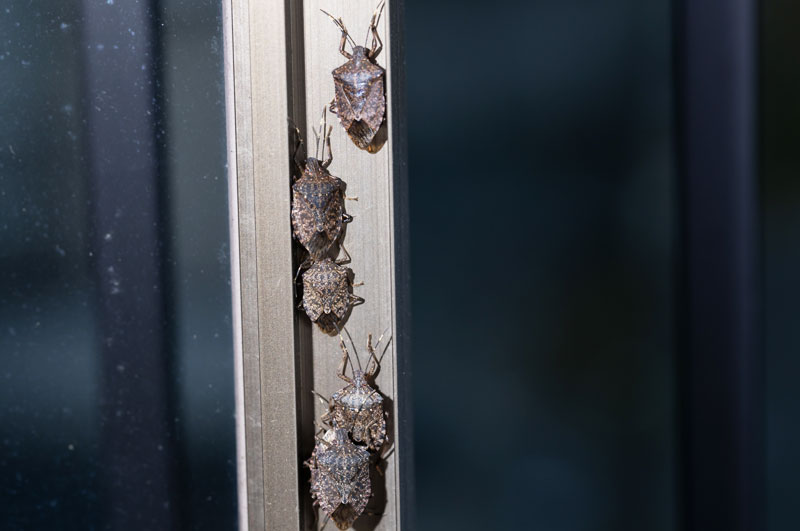
In Wisconsin, most homes deal with fewer than 100, but some infestations reach into the thousands. A small number of people can also have allergic reactions to them.
Outside, brown marmorated stink bugs feed on hundreds of kinds of plants, including apples, raspberries, grapes, tomatoes, peppers, and sweet corn.
Most homeowners start with a fly swatter or the vacuum. That deals with the bugs you can see, but not the ones already packed into your walls, and crushing or vacuuming them releases the odor.
Indoor foggers and bug bombs don’t reach wall voids or attics, which is where most of them are hiding.
Hardware-store sprays have a timing problem, too. Spraying the bugs on your siding in late October kills the ones in front of you, after many have already found their way in.
The protection that actually works goes on before they gather, and it’s paired with sealing the gaps they use.
In Wisconsin, brown marmorated stink bugs go through one generation a year, and the adults that survive winter are the same ones that moved into homes the fall before. Fall is when they become your problem, but the timing of everything else explains why.
| Season | Months | What Stink Bugs are Doing | What it Means for Your Home |
|---|---|---|---|
| Spring | March-May | Overwintered adults wake up and try to get back outside to feed and mate | Bugs show up on windows and walls indoors as they look for a way out |
| Summer | June-August | Females lay eggs on leaves; young nymphs appear in early summer and new adults by mid-to-late summer | Activity is outdoors, in gardens, fruit trees, and along field and wooded edges |
| Fall | September-October | Adults gather on warm, sunny walls and push into gaps, often right after the first cold snaps | Peak invasion season, and the window for exterior treatment |
| Winter | Novemeber-February | Bugs sit inactive in wall voids, attics, and other sheltered spots | Warm spells and heated rooms wake a few up, sending them toward windows and lights |
The best time to treat is late summer into early fall, before the bugs start gathering. Once they’re in the walls, an exterior treatment can’t reach them.
At Slayer Pest Control, stink bug control is about stopping the invasion before it starts. Here’s how we do it:
We look for areas where stink bugs are gathering, including siding, windows, doors, eaves, and other exterior transitions. We also look for potential entry points and areas where insects may be getting into the home.
If stink bugs are already appearing indoors, we consider where they are being found and will perform a targeted interior treatment to the stink bug harborage areas.
Before treatment, you’ll get a short prep checklist. We ask the customer to:
We apply a protective treatment along the foundation, siding edges, window and door frames, eaves, and soffits, with extra attention on the south- and west-facing walls where stink bugs cluster. Timing is everything. We schedule this treatment for late summer and early fall, right before they start looking for a way in.
The products used typically take an hour to dry, and once dry, kids and pets can return to the area.
Treatment works best when there are fewer ways inside.
We point out every gap we find and treat those access points directly, then walk you through the fixes: caulking siding and trim seams, screening vents, replacing worn door sweeps, and repairing window screens.
Stink bug control is intended to reduce exterior activity and help prevent new insects from entering the home.
However, no exterior treatment can guarantee that every stink bug will be kept out, especially if insects entered before service or are already overwintering inside wall voids, attics, or other concealed areas.
If activity continues after treatment, we recommend contacting us so we can assess the situation. Whether another visit or additional treatment is appropriate depends on the timing, future weather forecast, the location of the insects, the original service scope, and whether the activity is coming from insects already inside or new exterior activity.
Any additional service would be discussed with the customer before proceeding.
Our standard stink bug treatment is not an exclusion service. We can identify potential entry points and recommend improvements such as sealing gaps around windows, doors, siding transitions, utility penetrations, and vents where appropriate.
Physical repairs, caulking, screening, and door-sweep installation are priced separately from the standard treatment.
Professional treatment does the heavy lifting, but a few homeowner habits make a big difference:
One of the biggest mistakes is waiting until stink bugs have already entered the home in large numbers before taking action. Another mistake is relying only on killing the stink bugs that are visible indoors while ignoring the exterior activity and potential entry points.
At Slayer Pest Control, our approach is to be proactive rather than reactive and “Slay Before They Prey.” Treating appropriate exterior surfaces before stink bugs move indoors can help reduce the pressure around the home, while sealing entry points can further reduce opportunities for them to get inside.
Slayer Pest Control is a locally owned and operated company that deals with Wisconsin’s fall invaders every year. Stink bugs, box elder bugs, and Asian lady beetles often show up on the same walls in the same weeks, and we treat for all three. You can count on:

✅ An inspection that identifies exactly which bugs you have before we treat
✅ Treatment timed to Fox Valley weather, not a generic calendar
✅ Eco-conscious products chosen with kids and pets in mind
✅ Clear answers and quick replies, just a call or text away
From Menasha to Appleton, Neenah to Greenville, and Oshkosh to Green Bay, we’ll inspect your home, explain the plan, and keep stink bugs on the outside where they belong.
“A home in Hortonville, WI, will always remind me of just how bad a stink bug infestation can get!
The tenants were dealing with hundreds of stink bugs throughout the home. They were accumulating in light fixtures, electrical outlets, and throughout multiple rooms, particularly around windows and along the flooring beneath them.
To address the infestation, we carefully removed the outlet covers and light fixtures to access areas where stink bugs were gathering. We applied a dust treatment in appropriate locations and a spray treatment around window trim and baseboards.
The results were encouraging! After treatment, the tenant reported an immediate reduction in stink bug activity and left Slayer Pest Control a five-star Google review.
We continued servicing the property on a scheduled basis for a period of time. Although we no longer service this property following a change in property management, this experience is a great example of how overwhelming stink bug activity can become, and why professional treatment is important!”
Here are some of the most frequently asked questions we get about stink bugs and stink bug pest control. If you have further questions, please give us a call:
Late summer, before the bugs start gathering. Late August and September are ideal in the Fox Valley. Once they’ve moved into your walls, exterior treatment can’t reach them until spring.
The stink bug service is a separate service from the Slayer Home Protection service, as these are seasonal invaders up until November. If a homeowner is on the Slayer Home Protection service and has a stink bug concern, we can add this service at any time. The price range will depend on the size of the property and whether an exterior-only treatment is needed, or if an interior treatment is also needed.
We apply the fall treatment when you start to see the first few stink bugs in fall gathering around your home. The stink bug treatment is all about timing, and that will depend on seasonal weather and your property’s overall stink bug population. One application is needed in fall. We also perform a treatment in spring when stink bug populations are active, and this is one application as well.
No. Stink bugs don’t breed indoors. The ones you see inside in winter are adults that moved in during the fall, and they’ll try to head back outside in spring.
They’re waking up. Bugs sheltering in your walls or attic can become active when the sun warms a wall or when they end up near a heated room. They head for light, which is why they turn up on windows and lamps.
Our primary focus is preventing and reducing exterior stink bug activity before insects enter the home. If stink bugs are already indoors, the appropriate approach depends on where they are located and how extensive the activity is. We can treat accessible areas inside the home and, if needed, utilize monitoring insect devices to help attract and capture them inside.
Pick them up with a tissue, vacuum them with a bagged or dedicated vacuum, or knock them into a container of soapy water. Avoid crushing them, and don’t use your regular vacuum unless you’re ready for it to smell like stink bugs for a while.
No, but they act alike. Both gather on sunny walls in fall and spend the winter inside walls. Box elder bugs are black with red-orange markings, while brown marmorated stink bugs are mottled brown and shaped like a shield. Our fall treatment covers both, along with Asian lady beetles.
Don’t spend another winter picking stink bugs off your windows.
Reach out to Slayer Pest Control at (920) 370-3430 to schedule your inspection, and we’ll keep them outside where they belong.

Slayer’s home protection program provides protection for common pests. 3 seasonal treatments are included.
Learn More
Slayer’s home + mosquito protection program provides seasonal protection for common pests and mosquitoes. 5 total treatments and an In2Care Mosquito Bucket are included.
Learn More
Slayer’s home + rodent protection program provides year-round protection for common pests and rodents. A total of 3 Seasonal GPC Treatments + 3 Additional Rodent Visits.
Learn More
Slayer’s premium protection program provides year-round protection for common pests, mosquitoes, and rodents. A total of 8 visits are included.
Learn More